
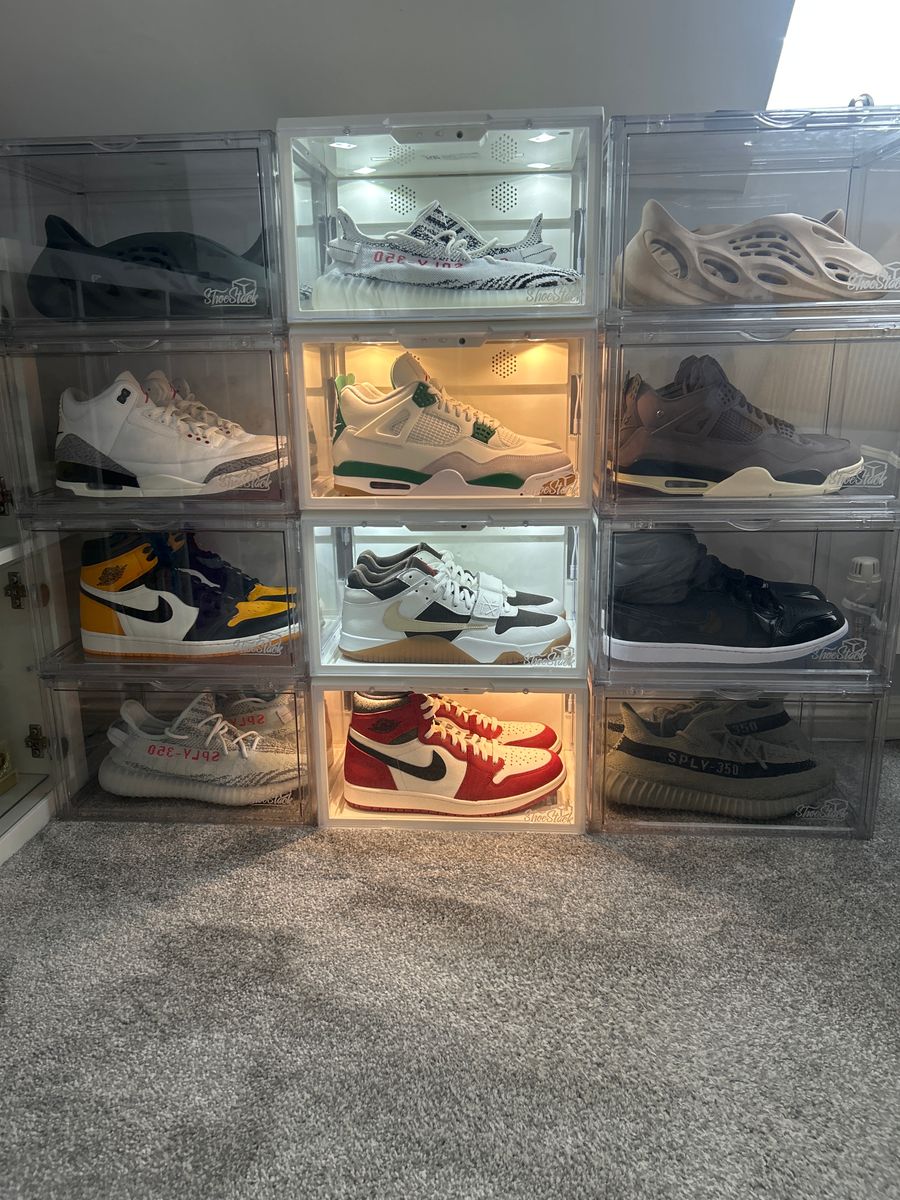
Open shelving looks tidy for about five minutes. Then dust settles, pairs get split up, and your best trainers end up exposed to sunlight, scuffs and whatever is floating around the room. That is exactly why shoe storage that closes has become the smart choice for collectors and style-conscious households alike. If you want footwear storage that keeps shoes clean, protected and still worth showing off, the door matters more than most people think.
Why shoe storage that closes beats open racks
An open rack is fine for a couple of everyday pairs by the front door. It is not the answer for a growing collection, premium leather footwear or boxed-fresh sneakers you actually want to keep in top condition. Once shoes are left uncovered, they are dealing with dust, room moisture, pet hair, accidental knocks and steady fading from light.
Closed storage fixes that. It creates a barrier between your footwear and the mess of daily life. That matters whether you are storing white leather trainers, suede pairs, occasion heels or limited releases. Protection is the obvious win, but there is another one – closed storage looks more intentional. Instead of visual clutter, you get a cleaner setup that feels designed.
For many buyers, the sweet spot is not just any closed unit. It is storage that protects without hiding the collection completely. That is where modern drop-front and clear display boxes stand well above generic cupboards and basic plastic bins.
The real job of closed shoe storage
Good shoe storage should do three things at once: protect, organise and present. Most cheap options manage one of those, maybe two. Very few handle all three properly.
A closed cabinet can hide clutter, but it usually makes access awkward. You forget what is inside, pairs get pushed to the back, and the shoes you wear least become the ones you never see. On the other hand, a flimsy plastic box may close, but if it cracks easily, fogs up, or feels awkward to stack, it quickly becomes a downgrade rather than an upgrade.
The best shoe storage that closes is designed around real use. It should open easily, close securely, stack without wobble and let you identify your pairs without opening every single box. For collectors, side-view or front-view visibility is a major advantage. For busy households, quick access matters just as much as appearance.
The main types of shoe storage that closes
Closed cupboards and shoe cabinets
These work best when your priority is hiding everything away. They suit hallways, utility rooms and more minimal interiors where you do not want shoes on display. The trade-off is visibility. You lose sight of the collection, and deeper cabinets often waste space unless the shelves are carefully planned.
They are also less flexible. If your collection grows, you cannot simply add another unit on top. That matters more than people expect, especially if one pair turns into ten, then twenty.
Lidded plastic boxes
These are common because they are cheap and easy to find. They do keep out dust, and for basic storage they can do the job. But cheap lidded boxes tend to be frustrating in everyday use. To get to one pair, you often need to unstack several boxes first. That is fine in theory and annoying in practice.
They also rarely feel premium. If you care about presentation as much as protection, standard lidded boxes usually fall short.
Drop-front shoe boxes
This is where modern collector storage starts to make sense. A drop-front opening means you can access one pair without dismantling the whole stack. If the boxes interlock properly and the door closes securely, you get cleaner lines, quicker access and a setup that scales with your collection.
For trainer collectors and fashion-focused households, this style hits the right balance. It feels display-ready, but it still protects against dust and everyday damage.
Clear display cases with doors
If you want your collection to look curated rather than stored away, clear display cases are the strongest option. They keep shoes visible from the front or side while still closing fully. That means the pair remains part of the room instead of disappearing into a cupboard.
This style works especially well for statement footwear, premium trainers and colour-coordinated collections. It turns storage into part of the décor, which is exactly what many buyers want.
What to look for in shoe storage that closes
Not all closed storage is built equally. The details decide whether you are buying a long-term setup or just another temporary fix.
The first thing to check is how the door closes. A weak flap or badly fitted lid does not give much reassurance. A properly engineered magnetic or secure front door feels better, looks sharper and is easier to use every day. If you open a box often, that convenience matters.
Next comes stackability. If boxes do not lock together well, the whole setup can feel unstable, especially when stacked high. A good modular system should feel deliberate, not precarious. Interlocking design gives you a cleaner finish and makes it easier to build vertically without the wobble that cheaper boxes often develop.
Clarity matters too. If the box is transparent or has a clear viewing panel, you can find what you need instantly. That sounds basic, but it changes the whole experience. You wear more of your collection when you can actually see it.
Then there is size. This is where plenty of people get caught out. A box that works for low-profile trainers may not suit high-tops, bulky running shoes or heels with extra height. Before you buy, think about the biggest pairs in your collection, not the average ones.
Finally, consider how the storage looks in the room. Closed shoe storage is not only about hiding mess. For a lot of customers, it is about upgrading the space. A modern clear crate or display box feels far more premium than a pile of cardboard boxes or cloudy tubs shoved into a corner.
Shoe storage that closes for different homes
The right answer depends on how you live and how you collect.
If you are dealing with a hallway overflow, a slim closed cabinet may be enough for daily pairs. It keeps the entrance tidy and gets shoes out of sight quickly. But if your collection lives in a bedroom, dressing room or home office, visibility becomes a bigger factor. In those spaces, closed display boxes often make more sense because they combine order with presentation.
For collectors, modularity is usually the deciding factor. A fixed cabinet works until it is full. After that, you are shopping again. A stackable system can grow pair by pair, which is far better value over time. It also lets you change the layout if you move house, rearrange a room or expand the collection.
Families and shared homes need something slightly different. In that case, fast access and durability come first. Doors should be easy to open, easy to close and strong enough for regular use. Storage only stays organised if everyone actually uses it.
Why premium closed storage is worth it
Cheap shoe storage often looks like a saving until you live with it. Boxes crack, lids warp, stacks shift and the whole setup starts to look tired quickly. That is the problem with buying for price alone. You end up replacing poor storage instead of improving it.
Premium closed storage costs more because it solves more. Better materials hold their shape. Clear panels stay sharper. Doors close properly. Stacks look cleaner. The result is not just a nicer product but a better daily experience. Your shoes stay cleaner, your room looks more organised and your collection feels treated with the level of care it deserves.
For anyone storing expensive trainers, designer heels or favourite pairs they want to keep in strong condition, that extra quality is not excessive. It is sensible. Footwear that costs good money should not be stored in something that feels disposable.
A well-made modular setup also saves hassle later. Instead of starting again every time the collection grows, you can build on what you already have. That is one reason collector-focused systems stand out. They are designed for expansion, not just short-term storage.
When display matters as much as protection
There is no rule saying practical storage has to look plain. In fact, the best closed storage now does the opposite. It protects the pair while making it easier to appreciate. That is a big shift from old-school shoe cupboards and opaque tubs.
If you enjoy your collection, seeing it matters. Clear front or side-view boxes give your footwear a place in the room without leaving it exposed. For some buyers, LED-lit display units take that one step further and create a more premium setup. That level of presentation is not for everyone, but for collectors who treat shoes as part of their style identity, it absolutely makes sense.
This is where a brand like ShoeStack fits naturally. Premium stackable boxes with magnetic drop-front access, strong visibility and modular compatibility do more than store shoes. They create a setup that feels clean, protective and genuinely worth looking at.
The strongest choice is usually the one that matches your collection now and still works six months from now. If your shoes deserve better than open racks and awkward tubs, closed storage is not a finishing touch. It is the system that keeps the whole collection looking sharp.
Leave a Reply