
A pile of trainers by the door looks harmless until the midsoles yellow, the suede picks up dust, and one shoe somehow vanishes every time you are heading out. If you have ever asked what is the proper way to store shoes, the short answer is this: keep them clean, dry, supported, and protected from light, dust, and crushing. The better answer depends on the type of shoe, how often you wear it, and whether you want storage that simply hides clutter or actually does your collection justice.
For most people, shoe storage fails in one of two ways. Either shoes are shoved into a wardrobe floor where they get scuffed and flattened, or they are left out in the open where they collect dust, absorb household odours, and fade faster than they should. Premium footwear deserves better. So do the pairs you wear every day.
What is the proper way to store shoes at home?
Proper shoe storage is about protection first, presentation second, and convenience close behind. The right setup keeps each pair in shape, stops materials from drying out or warping, and makes it easy to see what you own without turning your room into a clutter zone.
At home, the best environment is cool, dry, and consistent. Shoes do not like damp corners, overheated cupboards, or direct sunlight near windows. Heat can weaken adhesives and dry certain leathers. Moisture encourages odour and mould. Sunlight is especially rough on colour, clear soles, and premium materials.
That is why breathable, enclosed storage tends to outperform open racks for anything you actually care about. Open shelving can look tidy for a week, but dust settles quickly and UV exposure does real damage over time. If your collection includes limited trainers, white leather, suede, heels, or occasion shoes, enclosed boxes are not a luxury. They are basic protection.
Start with preparation, not storage
The proper way to store shoes starts before the box, shelf, or crate. Putting dirty shoes straight into storage traps in grit, moisture, and bacteria. That is how you end up with stained uppers, permanent creasing, and that stale smell no one wants to admit is coming from the hallway cupboard.
Brush off loose dirt first. Wipe smooth leather and rubber areas with a soft cloth. Let damp shoes dry naturally at room temperature, never on a radiator or in direct heat. If the insides are sweaty, pull the laces loose, open the shoe up, and give it proper airflow before storing.
For pairs you value, shape matters as much as cleanliness. Shoe trees work well for leather shoes, while tissue paper or soft inserts help trainers and heels hold their form. This reduces toe-box collapse and keeps the silhouette looking sharp. If a pair came with spare stuffing and you still have it, that is often worth using.
The biggest mistakes people make
Most shoe damage happens through habits that seem convenient at the time. Stacking pairs on top of one another compresses materials and scuffs uppers. Keeping shoes in damp utility rooms or garages invites mildew. Hanging onto the original cardboard box can be fine for short-term storage, but it is not always ideal long term if ventilation is poor and visibility is non-existent.
Another common mistake is storing shoes where you cannot see them. That sounds minor, but hidden storage tends to become careless storage. Pairs get forgotten, crushed, or buried. When you can see each pair clearly, you rotate them more evenly and look after them better.
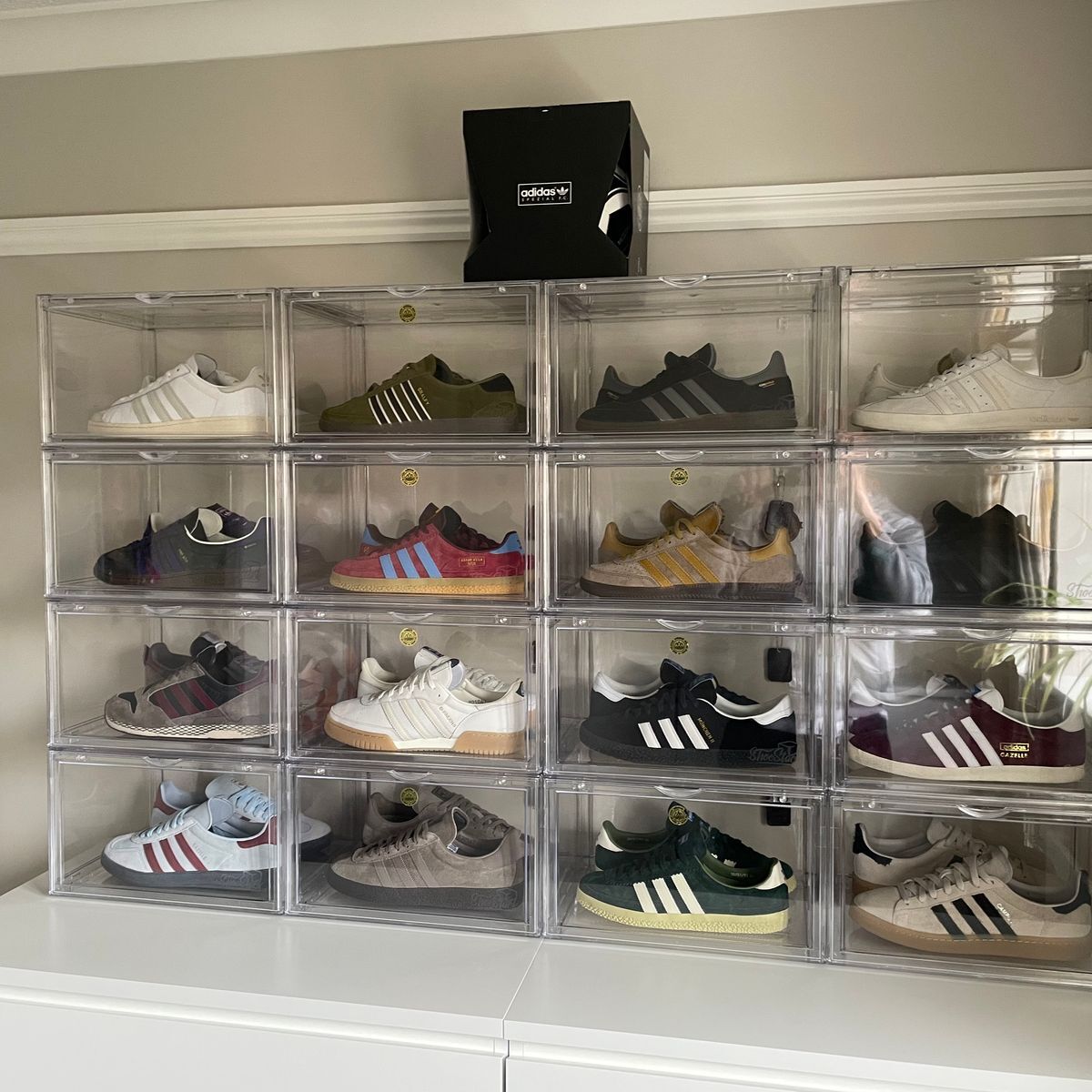
This is where modern drop-front and clear display storage has a genuine advantage. You get protection without sacrificing access. You can open one pair without unstacking three more, and you can keep your collection organised by style, colour, season, or frequency of wear.
What is the proper way to store shoes for different materials?
Not every pair needs the same treatment. Leather likes structure and stable conditions. Use shoe trees where possible and avoid airless, damp spaces. Suede and nubuck need extra defence from dust and moisture, so enclosed storage is particularly useful. White trainers and translucent soles benefit from protection against light exposure, which can accelerate discolouration.
Patent finishes scratch easily, so avoid letting shoes rub against each other. Delicate heels should never be thrown into mixed piles where buckles and pointed toes can mark other pairs. Knit and mesh trainers are less fragile in structure, but they still lose shape if crushed under heavier footwear.
Boots are the exception that often needs a different format. Short boots can work in larger crates, while tall boots may need vertical support to stop them slouching. It depends on shaft height and material stiffness. The principle remains the same: clean, dry, upright, and protected.
Why boxes usually beat racks
A basic rack is better than a floor pile, but it still leaves shoes exposed. Dust, pet hair, kitchen grease in open-plan homes, and everyday knocks all find their way onto your footwear. If your shoes are just functional beaters, that may not matter. If you have spent real money on a collection, it absolutely does.
Boxes solve several problems at once. They create separation between pairs, prevent accidental crushing, and keep the storage area looking clean. Clear boxes go one step further by making your collection visible without leaving it vulnerable. That is the sweet spot for collectors and style-led households – organised, protective, and display-ready.
Premium stackable boxes are especially effective because they use vertical space properly. Instead of shoes spreading across floors and shelves, the collection builds upwards in a clean footprint. That matters in UK homes where storage space is rarely generous. A modular setup also means you can start with a few boxes and expand without ending up with a mismatched mess.
The right setup for everyday pairs and collector pairs
Everyday shoes need easy access. The proper way to store them is somewhere near your routine – bedroom, dressing area, hallway cupboard – but still protected from dust and random damage. Drop-front boxes are ideal here because you can grab the pair you want fast without disrupting the rest.
Collector pairs need a little more control. You want enclosed storage, minimal UV exposure, stable temperature, and enough visibility to enjoy what you own. If a collection is part of your room aesthetic, side-view or front-view clear display boxes make far more sense than opaque tubs. You are not just storing shoes. You are curating them.
For people with growing collections, consistency matters. Matching stackable units look sharper, use space better, and keep dimensions predictable across the setup. That sounds like a small detail until you have ten different box types that do not align properly.
How often should you check stored shoes?
Even well-stored shoes should not be ignored for months on end. Rotate through your collection, air pairs occasionally, and check for early signs of moisture, sole separation, or material changes. This is particularly important for shoes you wear rarely.
If you live in a flat or house prone to condensation, keep a closer eye on storage areas near outside walls. If a room gets strong afternoon sun, avoid placing your collection where light hits directly. Good storage reduces risk, but it does not override the environment entirely.
The proper way to store shoes long term
For long-term storage, cleanliness becomes non-negotiable. Store shoes only when fully dry, shaped, and protected. Use enclosed boxes rather than leaving them exposed, and choose a storage area with a steady temperature. Loft spaces, garages, and sheds are usually poor choices because they swing too far in heat, cold, and humidity.
Long-term does not have to mean inaccessible. In fact, visibility helps you keep track of condition. That is one reason premium clear storage works so well. It protects pairs while making it easy to monitor them without opening every box.
For collectors who want storage to feel as premium as the footwear inside, a modular display system is the clear upgrade. ShoeStack is built for exactly that – protection, presentation, and stackable growth without the flimsy feel of generic boxes.
The proper way to store shoes is the way that keeps them cleaner, sharper, and ready to wear whenever you are. If your storage is crushing pairs, hiding them, or leaving them open to dust and light, it is costing you more than space. A better setup does not just organise your shoes. It respects them.
Leave a Reply