
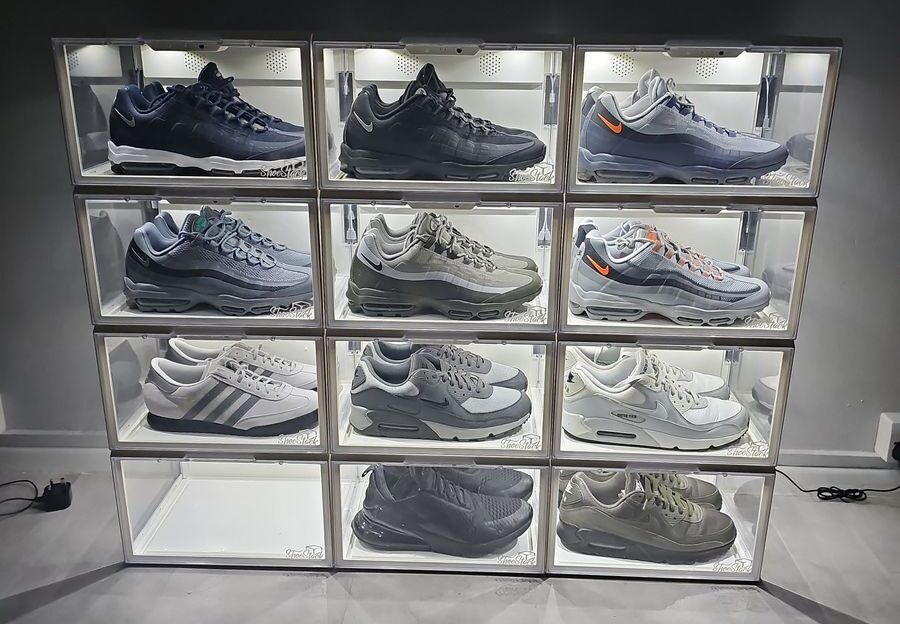
The wrong shoe storage shows itself fast. Creased trainers by the door, dusty heels at the back of a wardrobe, boxes collapsing on top of each other, and that one pair you can never find when you need to leave in five minutes. When people search for types of shoe storage, they are usually trying to solve two problems at once – protect the shoes and sort the space.
Not every storage format does both well. Some are cheap but expose your collection to dust and scuffs. Some save floor space but make access awkward. Others look sharp, stack neatly and let you actually see what you own. If you have more than a handful of pairs, the right choice is less about squeezing shoes out of sight and more about building a system that keeps them clean, organised and worth wearing.
The main types of shoe storage
There is no single best option for every home. The right format depends on how many pairs you own, whether you wear them daily or collect them, how visible you want the storage to be, and how much protection matters.
1. Open shoe racks
Open racks are the basic starting point. They are affordable, easy to place in a hallway, bedroom or utility space, and they work reasonably well for everyday pairs you reach for constantly.
Their weakness is obvious. Shoes are left exposed to dust, sunlight, pet hair and accidental knocks. In a busy home, an open rack can quickly look like clutter instead of organisation. For practical rotation pairs, it does a job. For limited editions, suede, white leather or anything you care about keeping pristine, it falls short.
2. Traditional shoe cabinets
Shoe cabinets are popular because they hide mess quickly. Slimline designs can work well in narrow hallways, and closed fronts create a cleaner look than an open rack.
The trade-off is capacity and visibility. Many cabinets are built for standard footwear and can struggle with high tops, bulky trainers or larger men’s sizes. You also lose that instant visual check. If you like a calm, minimal room and mainly store daily footwear, cabinets make sense. If your collection is part of your style setup, they can feel restrictive.
3. Over-the-door organisers
This is the space-saving option people buy when floor space is tight. Hanging organisers can be useful in student rooms, smaller flats or spare cupboards where every centimetre counts.
They are rarely a premium solution. Pockets can squash shoe shapes, the look is functional rather than polished, and heavier footwear is not always a great fit. They suit lightweight pairs and short-term organisation better than long-term protection.
4. Under-bed shoe storage
Under-bed storage is built around hidden capacity. Soft zip cases and shallow trays make use of dead space, which is ideal for out-of-season footwear or occasional pairs.
It is convenient in theory, but less so in daily use. If you are constantly dragging cases out, the system gets old fast. Shoes stored low to the floor also tend to be forgotten, especially if they are not visible. This works best as overflow storage, not as the core of a serious collection setup.
5. Original cardboard shoe boxes
Keeping shoes in their original boxes feels sensible, especially for collectors. Brand boxes can help preserve resale value, and they offer basic protection from dust and light.
But as a storage system, they are clumsy. Sizes vary, labels are inconsistent, stacked piles are unstable, and access is poor. You end up opening several boxes to find one pair. Original packaging is worth keeping for certain shoes, but relying on it as your everyday setup usually turns into a mess.
6. Clear plastic shoe boxes
This is where storage starts becoming a proper upgrade. Clear boxes fix one of the biggest issues with hidden storage – you can see the shoes immediately. They also offer much better dust protection than racks or open shelving.
That said, not all clear boxes are equal. Basic plastic boxes often look cloudy, feel flimsy and can be frustrating to open when stacked. If the lid needs to come off every time, convenience drops sharply. For casual organisation, standard clear boxes are a step up. For collectors and style-focused homes, the details matter more.
7. Stackable drop-front and display shoe boxes
This is the premium end of the types of shoe storage, and for good reason. A well-designed stackable drop-front box combines protection, access and presentation in one format. You can stack vertically, keep pairs sealed from dust and dirt, open the front without unstacking, and turn the whole collection into a clean visual display.
For trainer collectors, fashion-led households and anyone tired of generic plastic tubs, this is the format that feels built for the shoes rather than just built to contain them. Strong interlocking design matters here, as does clarity of the panels, magnetic closure quality, ventilation, and whether the range scales easily as the collection grows. Premium acrylic and side-view display boxes push that even further, especially when the shoes are part of the room aesthetic rather than something to hide away.
Which types of shoe storage suit different buyers?
If you own six everyday pairs and only want to clear the hallway, you do not need a collector-grade display wall. A slim cabinet or tidy rack may be enough.
If you rotate through 20, 30 or 50 pairs, the calculation changes. You need access, consistency and a layout that does not collapse into chaos after a week. This is where modular stackable storage stands out. It gives the collection structure and keeps expansion simple.
If you buy premium trainers, designer heels or limited releases, protection should lead the decision. Dust, UV exposure, pressure from bad stacking and accidental scuffs all chip away at condition. In that case, enclosed clear storage beats open shelving every time.
And if presentation matters as much as protection, display boxes win comfortably. They let the collection look intentional. That matters more than people admit. Good storage changes how a room feels, but it also changes how often you enjoy and wear what you own.
What actually matters when choosing shoe storage?
Material quality comes first. Weak plastic, poor hinges and loose-fitting panels do not stay premium for long. If the storage flexes, clouds over or warps, the setup quickly starts looking cheap.
Access is next. This is where many systems fail. If getting one pair means moving three others, the storage is fighting you. Front-opening boxes are stronger in real-life use because they keep stacked layouts practical.
Then there is size compatibility. Many people underestimate how much room chunky trainers, high tops and men’s larger sizes need. Storage that only works for low-profile shoes is not versatile enough for most modern collections.
Finally, think about growth. A good system should not need replacing once you buy five more pairs. Modular formats are better because they let you start small and build a clean, matching setup over time.
Why premium display storage is gaining ground
Shoe storage used to be treated as a hidden utility product. That is no longer the case. For many buyers, especially in trainers and streetwear, the collection is part of personal style. The storage has to protect the investment, but it also has to look the part.
That is why premium drop-front crates, acrylic display boxes and LED-lit units are gaining ground over generic tubs and basic shelving. They turn storage into presentation without giving up practicality. You get a cleaner room, faster access and better protection, all in one system.
For UK homes where space is valuable, vertical stackability is a major advantage as well. Instead of spreading pairs across the floor, under the bed and inside random cupboards, you can build upward and keep the footprint compact. Done properly, it feels less like storage and more like a fitted display wall.
ShoeStack has built its range around exactly that idea – storage that protects, stacks and shows off the collection properly, rather than hiding it in compromise solutions.
The best choice depends on what you expect from storage
If you only want shoes out of the way, plenty of options will do. If you want them protected, visible and easy to access, the field narrows quickly.
The best shoe storage is not the cheapest box or the first rack that fits by the door. It is the format that matches the value of the shoes, the size of the collection and the standard you want your space to hold. Once your storage starts working as hard as the collection itself, staying organised becomes much easier – and the whole setup looks better every day.
Leave a Reply