
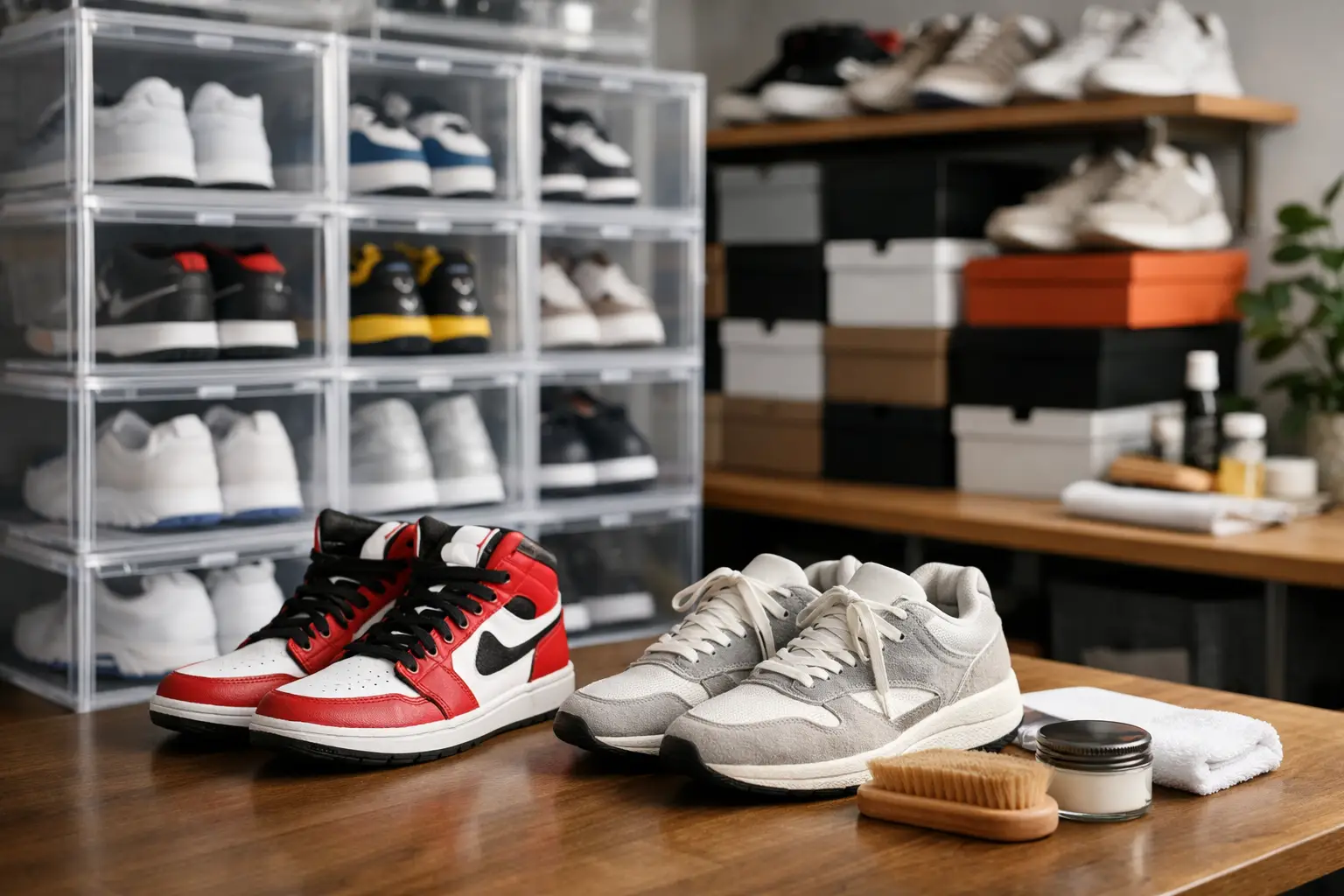
One scuffed toe box, one yellowed sole, one box collapse at the bottom of a pile – that is usually the moment people start taking storage seriously. If you are figuring out how to store sneaker collection pairs properly, the goal is not just getting them out of the way. It is keeping them clean, structured, easy to access and good enough to display with pride.
Collectors know the difference between owning trainers and managing a collection. A few pairs can live by the door. Ten, twenty or fifty need a proper system. The right setup protects shape, slows down dust build-up, reduces odour issues and stops your best pairs getting crushed under everyday beaters. It also makes your space look sharper, which matters when you have spent real money building a rotation worth showing off.
How to store sneaker collection pairs without damaging them
The biggest storage mistake is treating every pair the same. Daily runners, suede retros, leather high-tops and deadstock grails do not all need identical handling. Good storage starts with separating pairs by use and material, then matching the storage method to the shoe.
Pairs you wear often should stay easy to grab. That means clear, stackable storage that lets you see the shoe without opening multiple lids or pulling out battered cardboard boxes. Your rarer or more valuable pairs need more protection from dust, light and accidental knocks. If you mix everything together in one cramped cupboard, damage becomes far more likely.
Before any pair goes into storage, clean it properly. Dirt left on midsoles and uppers settles in, especially on white leather, mesh and knit. Moisture is another problem. Never store trainers even slightly damp after wear or cleaning. Let them air dry fully first, away from direct heat, so you do not trap moisture inside the shoe or the storage unit.
Shoe trees can help some pairs keep their shape, particularly leather or premium uppers, but they are not essential for every trainer. A lighter option is stuffing the toe box with acid-free tissue. What matters most is preventing creasing and collapse over time.
Choose storage that protects and displays
If you still keep expensive sneakers in their original boxes, there is a trade-off. Brand boxes can be useful for resale value and original packaging matters to many collectors. But for day-to-day storage, cardboard is not ideal. It hides the pair, stacks badly once the pile gets tall, and offers limited defence against dust, damp and wear from repeated handling.
Clear stackable crates are the stronger option for most collections. They give you instant visibility, cleaner lines and much better use of vertical space. Drop-front access is especially useful because you can remove a pair without unstacking the whole column. That sounds like a small feature until you have six boxes stacked and your favourite pair is sitting at the bottom.
Premium display boxes also make a real difference to the look of a room. A tidy wall of matched storage turns a pile of shoes into part of the space. For collectors who care about aesthetics as much as protection, that is the sweet spot – practical storage that still feels premium.
Some setups suit certain homes better than others. Front-view boxes work well in narrow spaces, while side-view options can create a stronger display if you want to show profiles and colourways. Fully transparent units make sense for statement pairs, and LED-lit cases are ideal if you want to turn a few grails into a proper feature. It depends on whether your priority is capacity, access or presentation.
The best place to store your trainers
Where you store your collection matters nearly as much as what you store it in. Heat, sunlight and damp are the three big problems. Direct sun can speed up discolouration and material ageing. Damp spaces can lead to mildew or stale odours. Heat can dry out glues and affect some materials over time.
A bedroom, dressing room, spare room or clean hallway cupboard usually works well if the temperature stays fairly consistent. Lofts, garages and sheds are usually poor choices in the UK because they swing too much between cold, damp and warm conditions. That instability is hard on footwear, especially premium pairs.
If your collection lives in a room rather than hidden storage, keep it out of direct window light where possible. UV exposure is one of those issues people often ignore until white soles start yellowing or colours begin to fade. Proper enclosed display storage offers a cleaner, safer answer than leaving pairs open on shelves.
How to organise a sneaker collection so it stays usable
A collection only works if you can actually use it. The best organisation system is one you will keep up with. For most people, that means sorting pairs in a way that matches how they wear and rotate them.
You might organise by frequency of wear, with everyday pairs at chest height and occasional or collectible pairs higher up. You might sort by brand, silhouette or colour if your collection is larger and more curated. Some collectors prefer seasonal storage, moving heavier or weatherproof pairs forward in autumn and lighter styles to the front in spring.
The point is consistency. Once each pair has a clear home, clutter drops immediately. You spend less time hunting for a match, and far less time restacking random boxes. If you share a home and want the space to stay sharp, that matters.
Matching box dimensions also helps more than people expect. Mixed storage sizes waste space and break the visual line. Interlocking, modular boxes create a cleaner footprint and are easier to scale as the collection grows. That is where a collector-focused system beats generic tubs from a supermarket every time.
Protection matters more for premium pairs
If you own limited releases, premium leather pairs or anything you plan to keep for years, storage should be preventative, not reactive. Once mould appears, soles yellow heavily or uppers lose shape, the damage is already done.
Dust protection is basic but essential. Dust settles into fabrics, laces and textured materials quickly, and open shelving leaves every pair exposed. Enclosed units solve that without hiding your collection. Odour control matters too. Clean shoes before storage and avoid shutting away pairs straight after a long day of wear. Air them first.
For suede and nubuck, avoid overcrowding at all costs. These materials mark easily if pairs rub together. Structured individual boxes are far safer than shared shelves. For leather, shape retention is key. For knit or mesh, keeping pairs clean and supported stops them looking tired long before their time.
If resale matters to you, keep original boxes elsewhere in good condition rather than relying on them as the main storage solution. That way you keep the packaging without sacrificing visibility or protection in your day-to-day setup.
Small spaces need smarter storage, not fewer shoes
Most collectors are not working with a walk-in wardrobe. They are making a bedroom corner, spare wall, under-stair space or wardrobe section work harder. That is why vertical stacking is such a strong option. It lets you build upwards instead of spreading pairs across the floor or stuffing them into hidden corners.
The trick is choosing storage that still looks deliberate. A stack should feel secure, aligned and easy to access. Cheap boxes often flex, cloud up, crack or come apart after repeated use. Better units are easier to assemble, more stable when stacked and far more presentable in a living space.
If you are starting from scratch, do not just buy for the pairs you own today. Buy for the collection you are likely to have in six months. Most sneaker collectors underestimate how quickly a tidy ten-pair setup becomes twenty. A modular system saves you from replacing everything later.
For households that care about interiors, this is where premium storage earns its place. Good shoe boxes do not just hide clutter. They create a cleaner room, better use of space and a setup that feels intentional. That is why serious collectors move on from mismatched cardboard and flimsy tubs fast.
A better standard for sneaker storage
The best answer to how to store sneaker collection pairs is simple: clean them, keep them dry, protect them from light and dust, and store them in stackable display boxes that make access easy. Everything else comes down to the size of your collection, the space you have and how much presentation matters to you.
For most people, the sweet spot is protective display storage that looks premium and scales with the collection. That is exactly why brands like ShoeStack have become the go-to for organised households and collectors who want more than basic plastic boxes. If your trainers matter, your storage should look and perform like it.
Treat your collection like a collection, not a pile. Your future self – and your freshest pair – will thank you for it.
Leave a Reply