
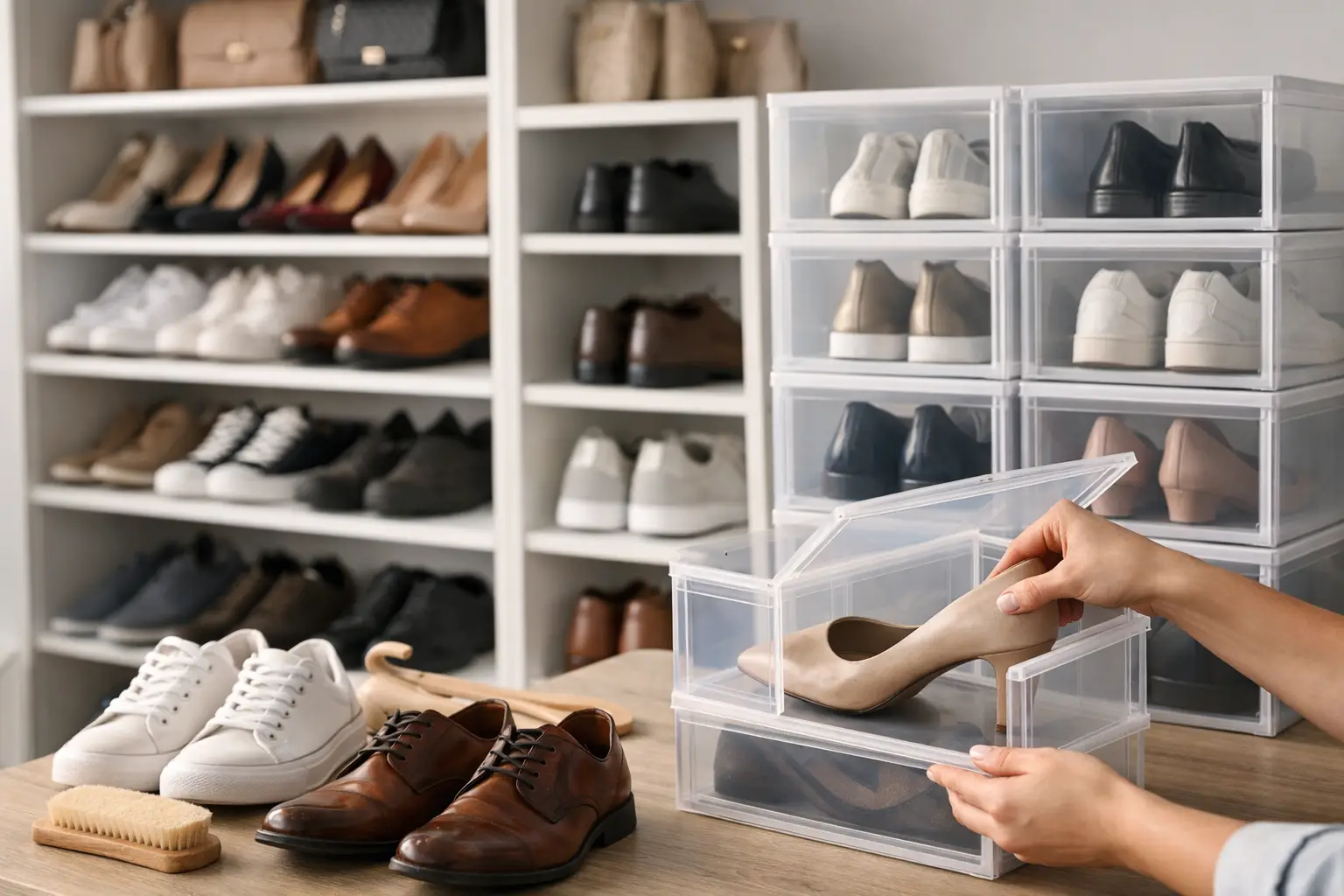
The moment your shoes start living in three different rooms, the collection is no longer organised – it is just spread out. If you have ever bought a great pair twice because the first pair disappeared into a wardrobe floor pile, this is exactly why learning how to organise a shoe collection matters. Done properly, it saves space, protects what you have paid for, and turns clutter into a display worth looking at.
A good setup is not only about tidiness. It is about visibility, protection, and making your collection easy to use every day. That means your everyday trainers should not be buried behind occasion heels, and your best pairs should not be left exposed to dust, sunlight, and accidental scuffs.
How to organise a shoe collection without wasting space
The biggest mistake people make is organising by wherever there is room rather than by a clear system. That is how collections become messy again within a week. The better approach is to organise your shoes around how often you wear them, how much protection they need, and how much space you realistically have.
Start by pulling every pair into one place. Yes, every pair. Trainers from the hallway, boots from under the bed, heels from the wardrobe, and the pair still sitting in last weekend’s bag. You cannot build a system if you do not know the size of the collection.
Once everything is visible, separate your shoes into four groups: daily wear, regular rotation, occasional wear, and collectible or premium pairs. This is where the structure starts to make sense. Your daily pairs need fast access. Your occasional shoes need protection but not prime placement. Your collectible pairs need proper display and dust protection, especially if presentation matters as much as preservation.
If you are short on room, vertical storage changes everything. Stacking well-designed shoe boxes gives you a clean footprint while using the full height of a wardrobe, dressing room, spare room, or hallway cupboard. This is usually far more efficient than open shelving, where gaps between pairs often waste valuable space.
Choose storage based on the shoes, not just the room
Not every pair needs the same type of storage. This is where a lot of people overcorrect. They either throw every shoe into identical tubs without thinking about fit and ventilation, or they leave everything on display regardless of condition and value.
For everyday pairs, accessibility matters most. Drop-front boxes are ideal because you can grab the pair you want without unstacking half your setup. If you rotate through five to ten pairs during the week, this style keeps the routine smooth.
For collectors, side-view or fully transparent display boxes make more sense. You can see colourways, silhouettes, and details instantly. That matters when you own multiple similar pairs and do not want to keep opening boxes to find the right one. It also makes the collection feel intentional rather than hidden away.
For premium leather shoes, special occasion heels, or limited-edition trainers, protection should lead the decision. Dust, UV exposure, and crushing are real issues over time. A proper enclosed box with a secure opening does more than make the room look good – it helps preserve shape, finish, and value.
There is also the question of aesthetics. If your storage is in a wardrobe, function may be enough. If it is in a bedroom, dressing area, or office, it should look sharp. Clean lines, stackable formats, and a consistent finish make a huge difference. The best storage does both jobs at once: it protects your shoes and upgrades the room.
Build zones that match real life
If your collection is large, one single block of storage is not always the smartest answer. The most effective setups usually have zones. Think of it as organising for behaviour, not just category.
Keep high-frequency pairs near the door or in the easiest-to-reach section of your wardrobe. This might be gym trainers, work shoes, school-run footwear, or the pairs you wear every weekend. These should never be hidden on the top shelf.
Then create a second zone for style rotation. This is where fashion pairs, cleaner trainers, and going-out shoes sit. They need to be visible and protected, but not necessarily at arm’s reach every morning.
Finally, create a display or archive zone for your best pairs. This is especially useful if you collect trainers or invest in standout footwear. A dedicated display wall or stacked clear crate setup gives those pairs the treatment they deserve while keeping them free from dust and accidental damage.
This zoning method works because it reflects how people actually use their shoes. A collection becomes easier to maintain when the layout supports daily habits.
How to organise a shoe collection by style, colour, or use
There is no single perfect category system. The right one depends on the size of your collection and how your brain works when you choose an outfit.
If you dress by occasion, organise by use. Keep work shoes together, occasion shoes together, trainers together, and seasonal footwear in its own section. This is practical and usually the easiest method for mixed households.
If you are style-led or collect specific silhouettes, organise by type and model. High tops, low tops, runners, court trainers, boots, heels – each section gets its own run. This is especially useful for larger collections because it stops everything blending into one visual wall.
Colour-based organising looks brilliant, but it is not always the most practical unless your collection is display-focused. It works well when the visual result matters as much as the speed of access. If you love a polished, curated look, colour can be the finishing layer after sorting by type.
A smart compromise is to organise first by category, then within each category by colour or frequency of wear. That gives you order without making the system too fussy to maintain.
Protect the pairs you care about most
A shoe collection can look organised and still be poorly stored. Protection is where the difference really shows.
Shoes left on the floor collect dust fast. Pairs stored in flimsy boxes can become squashed or marked. Shoes near windows risk fading, especially if they are brightly coloured or made with sensitive materials. If you own premium footwear, these are avoidable mistakes.
Use enclosed storage where possible. Keep pairs clean before they go back into storage. For structured shoes and boots, support the shape with inserts where needed. Most importantly, avoid overcrowding. If shoes are packed too tightly, you lose visibility and increase the chance of scuffs every time you take one out.
This is exactly why premium stackable crates and display boxes have become the go-to choice for collectors and style-conscious homes. They deliver protection, clean presentation, and modular growth in one system. If your collection grows, your storage should scale with it rather than forcing a full reset.
Make the setup easy to maintain
The best system is the one you will actually keep using. If organising your shoes feels like a chore every evening, it is too complicated.
Make sure every pair has a defined home. That sounds obvious, but it is the difference between a collection staying tidy or slowly collapsing back into random piles. Clear boxes help because there is no guesswork. You can see exactly where each pair belongs.
Do a quick edit every few months. If a pair has not been worn in a year, ask whether it still deserves prime space. Some shoes earn display status. Others are just taking up room. A tighter, better-curated collection usually looks better and functions better too.
It also helps to leave a little expansion room. If your storage is already filled to the last box, one new purchase throws the entire setup off. Modular systems are stronger because they let you add capacity without changing the look or layout.
For households with more than one person, consistency matters. Matching boxes and dimensions keep everything cleaner and easier to stack. It looks more premium and makes better use of space, especially in wardrobes and shared rooms.
A well-organised shoe collection should feel effortless. You should be able to find the pair you want in seconds, know it is protected, and actually enjoy seeing it in your space. That is the standard worth aiming for – not just less mess, but better storage that does justice to the collection you have built.
Leave a Reply