
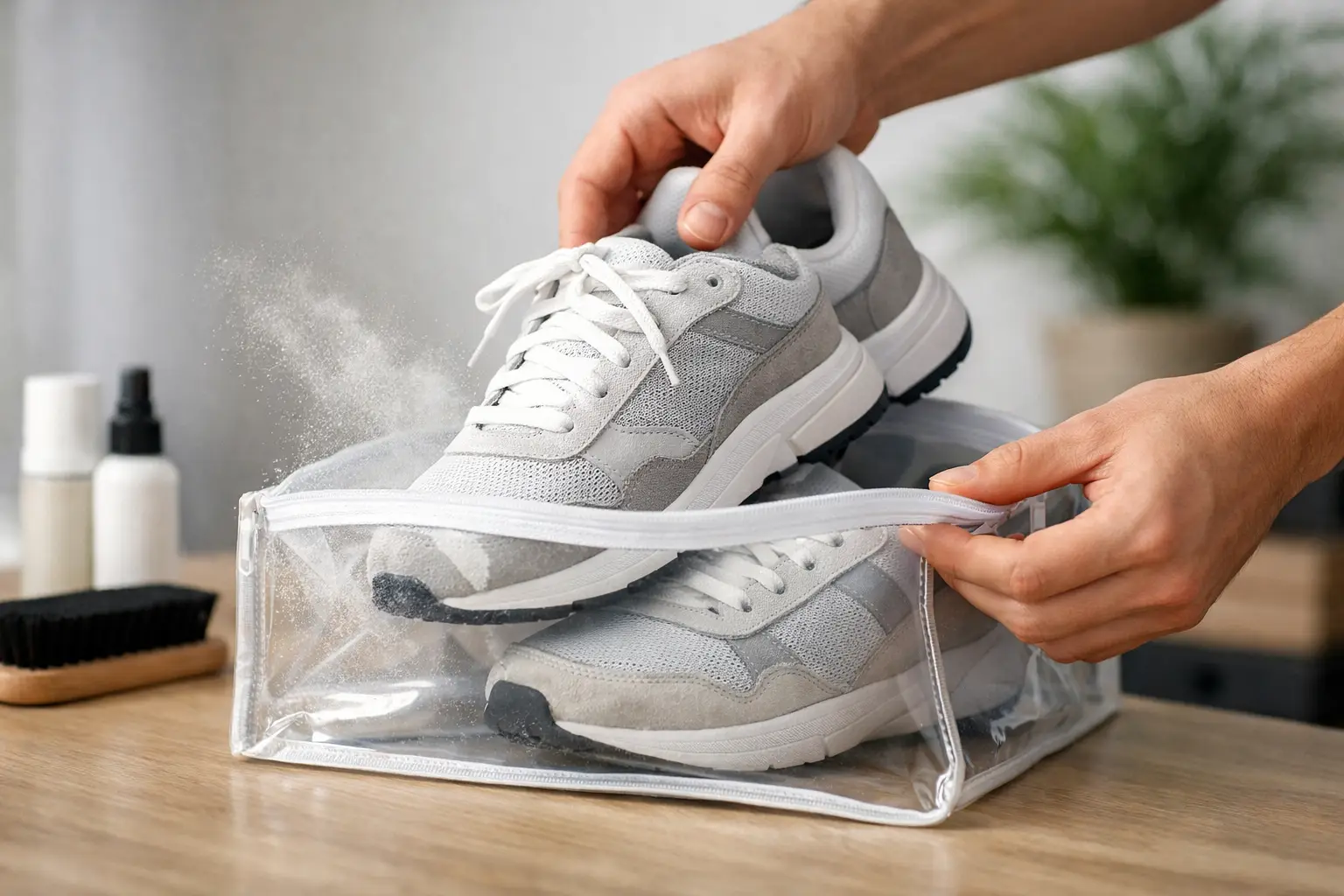
Dust settles fast. One day your favourite pair looks box-fresh, the next the uppers look dull, the midsoles have lost their clean edge, and the shelf around them is doing them no favours. If you are wondering how to protect trainers from dust, the answer is not just cleaning more often. The real fix is better storage, better placement, and a setup that protects your pairs without hiding them away.
For collectors and everyday trainer owners alike, dust is more than a minor annoyance. It can cling to mesh, work its way into suede, settle into stitching, and make bright white soles look tired long before the shoes are actually worn out. If you have spent good money on limited pairs, premium leather releases, or simply a rotation you are proud of, leaving them exposed on the floor or an open rack is an easy way to lose that fresh look.
Why dust is harder on trainers than people think
Dust does not just sit on the surface looking untidy. Over time, it mixes with moisture in the air, airborne oils, and general household grime. That combination can leave materials looking flat and dirty even when they have barely been worn. On smooth leather, the effect is usually cosmetic at first. On suede, nubuck, knit and mesh, it is more stubborn because fine particles settle into the texture.
This matters more in busy homes, city flats, or rooms with regular foot traffic. If your trainers live near the hallway, under a clothes rail, by an open window, or on an exposed shelf, they are collecting more airborne debris than you think. Add central heating, pets, carpets, and regular movement through the room, and dust becomes a daily issue rather than an occasional one.
How to protect trainers from dust at home
The best approach is to stop dust landing on your shoes in the first place. Constant wiping helps, but prevention wins every time. Open shelving might look convenient, yet it leaves every pair exposed. If your collection is on display, each shoe needs a barrier between it and the room.
Closed storage boxes are the most effective option because they protect the trainers while keeping them visible and easy to access. That balance matters. If storage feels awkward, people stop using it properly. A clear, stackable box with a front opening is far more practical than stuffing pairs back into cardboard packaging or leaving them loose by the skirting board.
The right storage also protects more than the uppers. Dust settles on soles, laces, sock liners, and inside collars. Once it builds up, every wear transfers that dirt back onto the shoe. Properly enclosed storage cuts that cycle down straight away.
Closed display beats open shelves
There is a reason serious collectors move away from open racks. They look good for a week, then the maintenance starts. Dusting the shelves, wiping the shoes, cleaning around the pairs, and trying to keep everything presentable turns into a chore.
A sealed or semi-sealed display box gives you a cleaner result with less effort. You still get the visual impact of your collection, but without the constant build-up. This is where premium storage earns its place. A stackable display crate does not just tidy the room up. It creates a controlled space around each pair, which is exactly what trainers need if you want them to stay bright, crisp and ready to wear.
Placement matters more than most people realise
Even with good storage, where you keep your trainers makes a difference. Avoid placing boxes next to radiators, frequently opened windows, or in the direct path of people walking through the room. Dust moves with air and movement. Hallways, landings and rooms with a lot of soft furnishings usually need more protection than cleaner, lower-traffic spaces.
If you keep trainers in a bedroom or dressing area, stacking them vertically in a defined zone usually works better than spreading them across several shelves. It looks sharper, uses space properly, and reduces the amount of exposed surface around the shoes.
The best storage materials for dust protection
Not all trainer storage performs the same way. Cardboard shoe boxes are fine for short-term storage, but they are not ideal if you want easy access, visibility and long-term presentation. They can also trap stale air and make it harder to keep your setup looking organised.
Clear plastic and acrylic-style storage boxes are stronger choices for most homes because they create a visible barrier against dust while letting you actually enjoy the collection. This is especially useful if you rotate pairs often. You can see what you own, keep each pair separated, and avoid rummaging through cupboards where shoes rub together and pick up extra dirt.
For collectors, this is the sweet spot between protection and presentation. ShoeStack has built its range around exactly that point – keeping pairs protected from dust and everyday grime while turning storage into a proper display. That matters when your trainers are part of the room, not something you want hidden away.
Cleaning habits that help keep dust off for longer
Storage does most of the heavy lifting, but a few simple habits make a visible difference. Always put trainers away clean enough to store. They do not need a full deep clean after every wear, but they should not go back with dusty soles, dirty toe boxes or loose debris around the upper.
A quick wipe with a soft microfibre cloth is often enough for leather or synthetic pairs. For mesh or knit, a soft brush works better because it lifts surface dust without grinding it in. Suede needs the most care. Rubbing with the wrong cloth can flatten the nap, so use a suede brush and light pressure.
Let trainers air out before placing them back in closed storage, especially after a long day out. Dust protection should not come at the cost of trapped moisture. If a pair is slightly damp from wear, give it time to breathe first. Once dry, store it properly.
Should you use dust bags?
Dust bags can help, but they are not the best all-round solution for everyday trainer storage. They work well for occasional pairs or premium leather footwear, especially if you are storing them inside a wardrobe or taking them on the move. For regular rotation, though, dust bags are less convenient because they hide the shoes, take extra time, and can get ignored after a week.
If your goal is daily protection with easy access, clear enclosed boxes are usually the better answer. You are more likely to use a system that lets you open, wear and return your pair in seconds.
How to protect trainers from dust without ruining the look of your room
This is where a lot of people compromise. They either leave their trainers out because they want the room to look good, or they hide them away and lose the whole point of collecting. You do not need to choose one or the other.
Modern trainer storage should look clean, premium and deliberate. Stackable drop-front boxes, side-view display units and transparent cases keep the collection visible while protecting it from airborne dirt. They also make the room feel more organised. Instead of random pairs lining the floor, the trainers become part of a sharper setup.
For smaller spaces, vertical stacking is usually the smartest move. It keeps the footprint tight and makes a collection look curated rather than cluttered. For larger collections, modular boxes help you expand without everything looking mismatched. That is especially useful if your rotation grows over time and you want the display to stay consistent.
Common mistakes that leave trainers dusty
The biggest mistake is assuming occasional cleaning is enough. If shoes are left exposed, dust will keep coming back. Another common issue is storing pairs on top of wardrobes or under beds without enclosed protection. Those spots often collect even more dust than open shelves.
It is also easy to overlook the room itself. If the area around your trainers is cluttered, carpeted, or rarely cleaned, the shoes will show it. Better trainer care starts with a cleaner storage environment overall.
Finally, avoid overhandling delicate pairs. Constantly moving shoes around to dust them can do more harm than good, especially with suede and softer materials. A proper storage solution reduces the need for repeated contact.
The standard worth aiming for
If you want your trainers to stay looking fresher for longer, aim for a setup that does three jobs at once. It should block dust, make access easy, and look good enough to suit the rest of your space. Anything less usually falls apart in daily use.
The best storage does not feel like an afterthought. It protects the shape, finish and shelf appeal of the shoes while making the whole collection easier to manage. That is the difference between simply owning a lot of pairs and actually keeping them in collector-grade condition.
Your trainers can only look as fresh as the space you keep them in. Give them proper protection, and the clean look lasts far longer than any quick wipe-down ever will.
Leave a Reply