
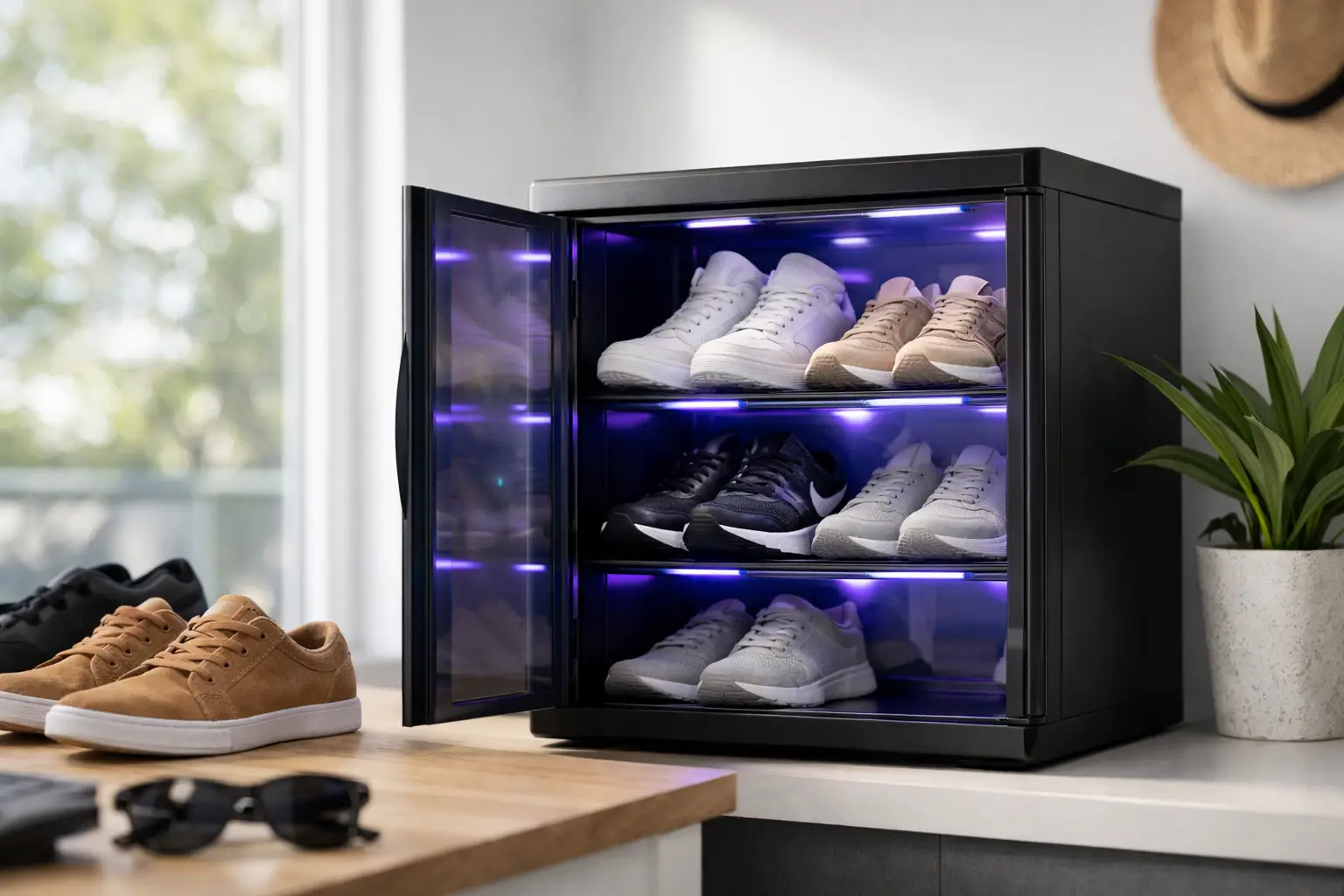
Leave a prized pair on an open rack by a bright window for a few months and the damage shows up fast – yellowing soles, faded suede, dulled leather and uneven colour that no cleaner can fully reverse. That is exactly why UV protection shoe storage matters if you own more than a couple of pairs and want them looking box-fresh for longer.
For collectors, this is not a minor detail. Sunlight does not just make a room look better. It can quietly age your footwear every single day, especially if your collection is displayed rather than hidden away. If you have invested in limited trainers, premium heels, designer shoes or everyday favourites you actually want to keep in rotation, proper storage is part of the protection, not an optional extra.
Why UV protection shoe storage matters
Most people think about dust first. Fair enough – dust is obvious, annoying and easy to blame. UV exposure is different because it works slowly and often goes unnoticed until the pair already looks older than it should.
Direct sunlight is the main culprit, but bright rooms with regular daylight can still have an impact over time. Certain materials are more vulnerable than others. White midsoles can yellow, dyed fabrics can fade, clear panels can cloud, and leather can dry out and lose richness. Glue and synthetic components can also degrade faster when heat and light are part of the mix.
That is the real point of UV protection shoe storage. It helps reduce light exposure while also controlling the everyday threats that come with open storage – dust, dirt, accidental scuffs, pet hair and household moisture shifts. Good storage does two jobs at once: it preserves the condition of the shoe and keeps the collection looking sharp enough to display.
What UV actually does to shoes
UV radiation breaks down materials at a surface level first, then deeper over time. On trainers, the damage often shows up where collectors notice it most – toe boxes, collars, side panels and midsoles. Bright colours can lose depth. White pairs start looking cream, then patchy. Transparent sections and icy soles can become less clear.
Suede is especially frustrating because fading and dryness can make the texture look flat. Leather tends to show colour loss and a tired finish. Mesh and knitted uppers may not crack in the same way, but they can still lose vibrancy. If a pair has mixed materials, damage may appear unevenly, which makes the whole shoe look off even if only one section has changed.
The trade-off is that some collectors want full visibility at all times. A clear display looks brilliant. But if that display sits in direct sun, it works against the collection. Presentation only makes sense when protection keeps up with it.
The problem with open racks and basic boxes
Open shelving wins on convenience, but it offers almost no defence. Shoes are exposed to daylight, room dust, cooking residue, pet hair and accidental knocks. If the rack is near a window or radiator, the situation gets worse.
Basic cardboard boxes block light better than open racks, but they create another problem. You cannot see what is inside without opening each one, and they rarely feel premium enough for a serious collection. They also stack poorly over time, crease easily and turn storage into a rummaging exercise.
Cheap plastic tubs are not much better. Some go cloudy, crack under weight or look out of place in a bedroom, dressing room or hallway. More importantly, not every transparent box is designed with collector-level protection in mind. Visibility alone is not the same as display-grade storage.
What to look for in UV protection shoe storage
The best setup balances visibility with protection. That means looking beyond the fact a box is stackable or clear. If you want your footwear to stay cleaner, brighter and easier to access, the details matter.
A well-designed shoe box should limit unnecessary UV exposure, keep out dust and let you access your pair without unstacking the whole column. Drop-front doors are especially useful because they make daily use simple. If storage is awkward, people stop using it properly. Then the shoes end up back on the floor, under the bed or on an exposed rack.
Material quality matters too. Strong acrylic-style panels and premium plastics hold their shape better, look cleaner in a display setting and feel like part of the room rather than a compromise. Interlocking stackability is another big win because it lets you build upward without the setup looking unstable or temporary.
For collectors with valuable pairs, a more enclosed display format makes even more sense. The ideal unit protects from light, dust and accidental contact while still giving you that visual payoff. That is where premium display crates and enclosed side-view or front-view boxes stand apart from generic storage.
UV protection shoe storage for display collections
If your collection is part of the room aesthetic, hiding everything away is not always the answer. You want to see the pairs. You want easy access. You probably also want the setup to look clean enough for photos and smart enough for everyday living.
That is where UV protection shoe storage earns its place. A premium enclosed box system lets you create a proper display wall without leaving shoes exposed on open shelving. You keep the visual impact, but with far better protection against fading, dust and day-to-day wear.
This matters even more in homes with large windows, bright loft spaces or modern interiors that pull in plenty of natural light. Those rooms look fantastic, but they are not automatically kind to footwear. A modular display solution gives you control. You can present the collection on your terms rather than letting the room dictate the condition of the shoes.
Some collectors assume darker storage is always better. Technically, complete darkness offers strong protection from UV. But if the shoes are difficult to enjoy, maintain or rotate, the system fails in practice. The smarter option is protected visibility – enough display appeal to suit the collection, with materials and construction that reduce exposure compared with open storage.
Who needs it most
Not every pair in every house needs premium storage. If you own two pairs of work shoes and a pair of old gym trainers, a full collector setup may be overkill. But once your collection has value – financial or personal – the equation changes.
Sneaker collectors are the obvious group. Limited releases, white midsoles, translucent soles and mixed-material uppers are all vulnerable to visible ageing. Fashion footwear owners should care too, particularly if they store heels or leather shoes in bright bedrooms or dressing spaces. Even households focused mainly on keeping things tidy benefit from enclosed, protective storage because it cuts clutter while preserving condition.
If your first thought is, I only wear some pairs occasionally, that is actually a stronger case for better storage. The less often a pair is worn, the easier it is to forget what light exposure is doing while it sits there.
Choosing the right setup for your space
Small collections usually need accessibility first. A stack of premium drop-front boxes in a wardrobe, spare room or hallway cupboard can keep daily pairs protected without making them hard to grab.
Larger collections need a more thought-out system. That often means modular crates or display boxes that can scale as the collection grows. Consistent dimensions matter here because mismatched storage quickly looks messy and wastes space. A clean, interlocking setup makes the room feel organised and gives each pair a place.
If display is the priority, side-view boxes can be a strong choice for silhouette-heavy pairs, while front-view options suit collectors who care about branding, tongue details or overall symmetry. For statement spaces, enclosed display units with lighting can look exceptional, but the lighting should support the display rather than create extra heat issues. It always comes back to balance.
That balance is exactly why premium systems stand out. ShoeStack, for example, focuses on protective display rather than simple storage, which is what serious collections need once they move beyond a pile of boxes in the wardrobe.
Protection is not just about today
Shoes age whether you wear them or not. Good storage slows that process down. It keeps pairs cleaner, makes rotation easier and protects the look that made you buy them in the first place.
The real value of UV protection shoe storage is not only preserving resale condition, although that matters for some collectors. It is also about keeping your own collection looking right when you reach for a pair six months from now. No surprise fading. No yellowed sole from sitting in the wrong spot. No sense that your best pairs have been neglected in plain sight.
If your shoes are worth buying properly, they are worth storing properly too. Give them a setup that works as hard on protection as it does on presentation, and your collection will keep earning its place in the room.
Leave a Reply