
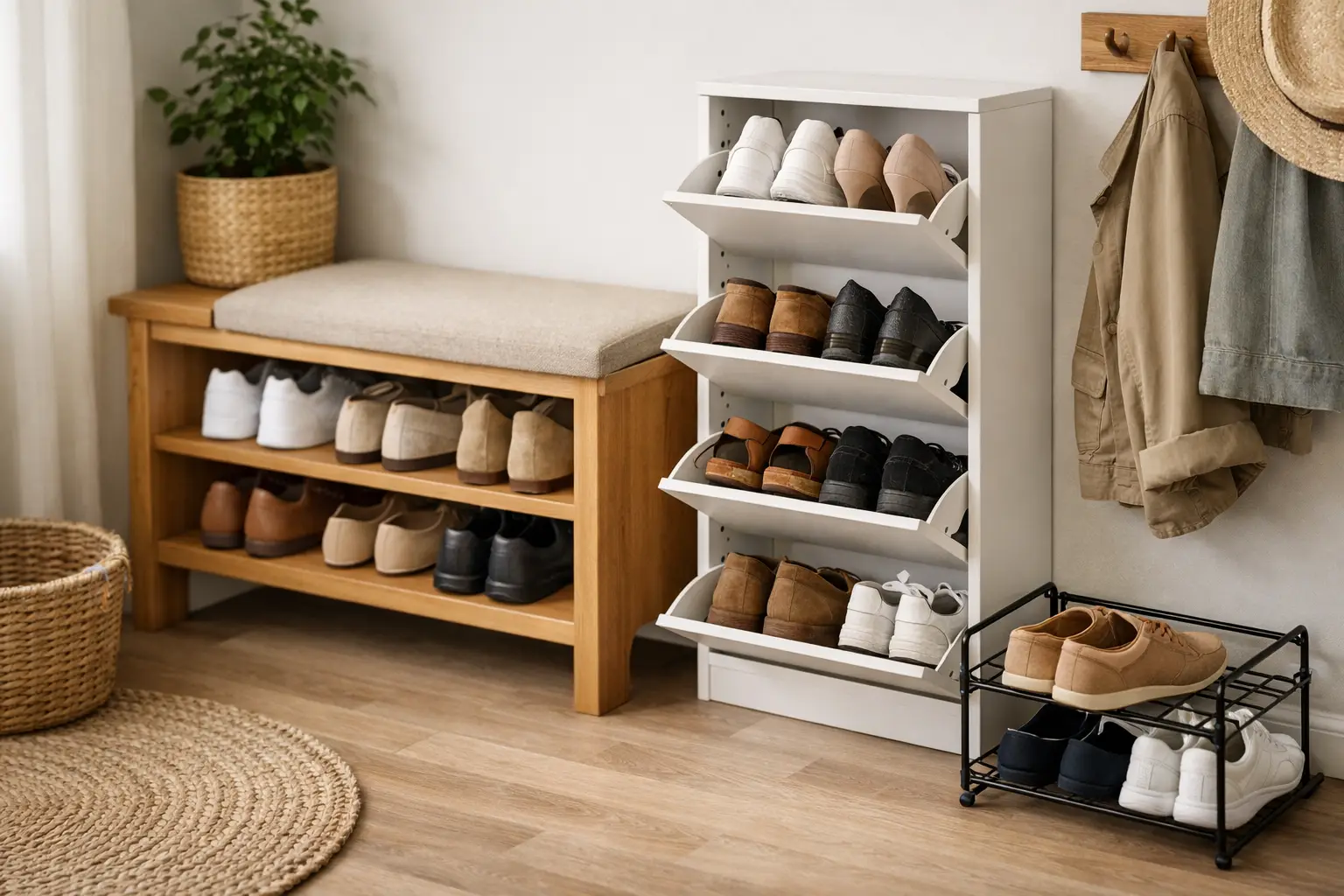
If your hallway floor has turned into a landing strip for trainers, heels and boots, the problem usually is not the number of pairs. It is the setup. Good shoe storage for small spaces is less about cramming shoes wherever they fit and more about using the right format so every pair stays protected, visible and easy to grab.
That matters even more if you have footwear worth looking after. Limited sneakers, suede boots, occasion heels and everyday pairs all suffer when they are shoved into a pile, left by the door or squeezed into a wardrobe corner. Dust builds up, uppers get scuffed, soles mark other pairs and the whole room feels busier than it needs to.
Why most small-space shoe storage fails
The usual fixes are cheap racks, fabric pockets and random boxes that never quite stack properly. They can hold shoes, but they rarely store them well. Open racks leave pairs exposed to dust and household dirt. Soft organisers often sag, hide your collection and make access awkward. Basic plastic tubs save some space, but if you cannot see the pair clearly or open the box easily, you stop using the system properly after a week.
In a small flat, entryway or box room, wasted vertical space is the biggest mistake. Floors fill up first, while the wall height above your shoes does nothing. The best storage setups build upwards cleanly and safely, so your collection takes up a smaller footprint without feeling buried.
What good shoe storage for small spaces should do
A strong storage solution needs to solve three things at once. It should reduce clutter, protect the shoes and make the collection look better rather than worse.
That is where premium stackable boxes earn their place. Instead of spreading pairs across a rack or under multiple bits of furniture, you create one organised storage wall. Each pair has its own enclosure, which means less dust, less accidental damage and no guessing where your favourite pair ended up. If the front opens easily, access stays quick. If the boxes interlock, the stack stays neat. If the design is clear, your shoes become part of the room rather than visual mess.
For collectors and style-led households, that mix matters. Storage should not feel like hiding things away out of shame. It should feel intentional.
Start with the space, not the shoes
Before choosing any storage format, measure the area you actually have. That sounds obvious, but people often count floor width and forget door swing, skirting boards, hanging coats or radiator clearance. In narrow homes, a few centimetres decide whether a setup feels smart or annoying.
Look for dead space first. The area beside a wardrobe, the bottom of a cupboard, the back of a bedroom door, the side of a dressing area or the strip of wall in a hallway alcove can all work. For small bedrooms, under-bed storage can help, but only for pairs you do not wear daily. Frequent-use shoes are far better in drop-front or front-access boxes because you can reach them without pulling everything out.
It also helps to divide your collection by use. Everyday footwear needs the easiest access. Occasion pairs can sit higher up. Bulkier boots may need a different dimension from low-top trainers. The more honest you are about what you wear weekly and what you are storing long term, the more efficient the setup becomes.
Vertical stacking beats floor sprawl
If you remember one rule, make it this one: stack up, not out. Small-space storage gets better the moment you stop thinking in single rows.
Interlocking stackable crates are ideal because they turn unused height into clean capacity. One narrow column can hold multiple pairs without eating into walking space. Compared with a standard floor rack, that is a serious upgrade in both footprint and appearance. It also gives you flexibility. Add another row as your collection grows, or split the stack across two areas if your layout changes.
The trade-off is stability and ease of use. Not every box is built to stack properly, and not every lid design works in a tight spot. Lift-off lids are frustrating in compact rooms because you need overhead space to remove them. Drop-front magnetic doors are much better for daily access, especially when boxes are stacked high. You open one pair without disturbing the rest.
Visibility changes everything
One of the fastest ways to lose control of a shoe collection is to store pairs where you cannot see them. The result is duplicate buys, forgotten pairs and constant rummaging. Transparent or side-view storage fixes that immediately.
Clear display boxes are not only about aesthetics, although they do make a collection look sharper. They also remove friction. You know what is inside, you can plan outfits faster and you are more likely to put shoes back where they belong. For sneaker collectors, side-view boxes can be especially strong because the profile of the shoe is part of the appeal. For mixed wardrobes, front-view can be simpler if you want a cleaner uniform look.
In small spaces, visual neatness matters almost as much as square footage. A tidy wall of matching storage looks calm. A stack of mismatched cartons and loose shoeboxes does not.
Protection matters more in cramped homes
Compact homes create more risk for footwear. Shoes are closer to radiators, windows, pets, damp entryways and everyday traffic. That makes enclosed storage a smarter choice than open shelving.
Dust is the obvious issue, but not the only one. Light exposure can affect materials and colour over time. Moisture and trapped odour are also common problems, particularly in entryways where recently worn shoes get dumped in a heap. A proper box system keeps pairs separated and better protected while still allowing your setup to stay structured.
If you own premium pairs, this is where generic storage often falls short. Thin plastic cracks, flimsy doors warp and cheap stacks become unstable. Premium boxes cost more up front, but they tend to deliver better visibility, stronger materials, cleaner stacking and a setup you will actually want to keep in the room.
Best storage setups by room
Hallway shoe storage for small spaces
Hallways need slim, tidy and fast-access storage. This is where front-opening stackable boxes work best because you can keep daily pairs near the entrance without creating a mess by the door. Go vertical in a corner or alcove rather than lining shoes along the skirting.
Bedroom storage
Bedrooms give you more freedom to display. Clear stackable crates can sit beside a wardrobe, at the end of a clothing rail or along one wall as a clean storage feature. If your room is modern and design-led, transparent units often look far more premium than hidden soft organisers.
Wardrobe and dressing area storage
If you have limited wardrobe floor space, use uniform boxes to create zones. Everyday pairs at eye or waist level, occasion shoes higher up, seasonal pairs lower down. Matching dimensions make a big difference here because the stack stays aligned and wastes less space.
When display and storage should be the same thing
For people who care about their collection, hiding every pair away is not always the goal. Good storage can also be part of the room’s look. That is especially true if you collect statement trainers or carefully chosen designer footwear.
Display-style storage works best when the boxes are consistent, crystal clear and easy to access. Add-on features like LED-lit units can make sense for feature pairs, but not every room needs them. In a small space, restraint usually wins. A clean stack of high-quality clear boxes looks premium on its own. Use feature display for your best pairs and practical stackable units for the rest.
That balance is where brands like ShoeStack stand out. The strongest systems do not force you to choose between protection and presentation. You get both, and that is exactly what smaller homes need.
The biggest buying mistakes to avoid
The first mistake is buying for today only. If you already own more than a handful of pairs, chances are your collection will grow. Modular storage gives you room to add on without replacing everything.
The second is choosing storage that is technically compact but annoying to use. If opening the box is awkward, if stacks wobble, or if the shoes are not clearly visible, the system will break down fast.
The third is ignoring dimensions. High-tops, heels and chunky soles need enough internal space. A box that fits one sleek trainer may not suit another pair at all. Collector-friendly storage should accommodate real footwear, not just the smallest possible pair.
A better standard for small-space storage
The best shoe storage does not ask you to accept clutter because your home is compact. It proves the opposite. With the right stackable, protective and display-ready setup, even a small bedroom, narrow hall or tight wardrobe can hold more pairs and look better doing it.
If you want your space to feel cleaner, your routine to feel easier and your collection to stay in top condition, stop thinking of shoe storage as an afterthought. In a smaller home, it is part of the furniture.
Leave a Reply