

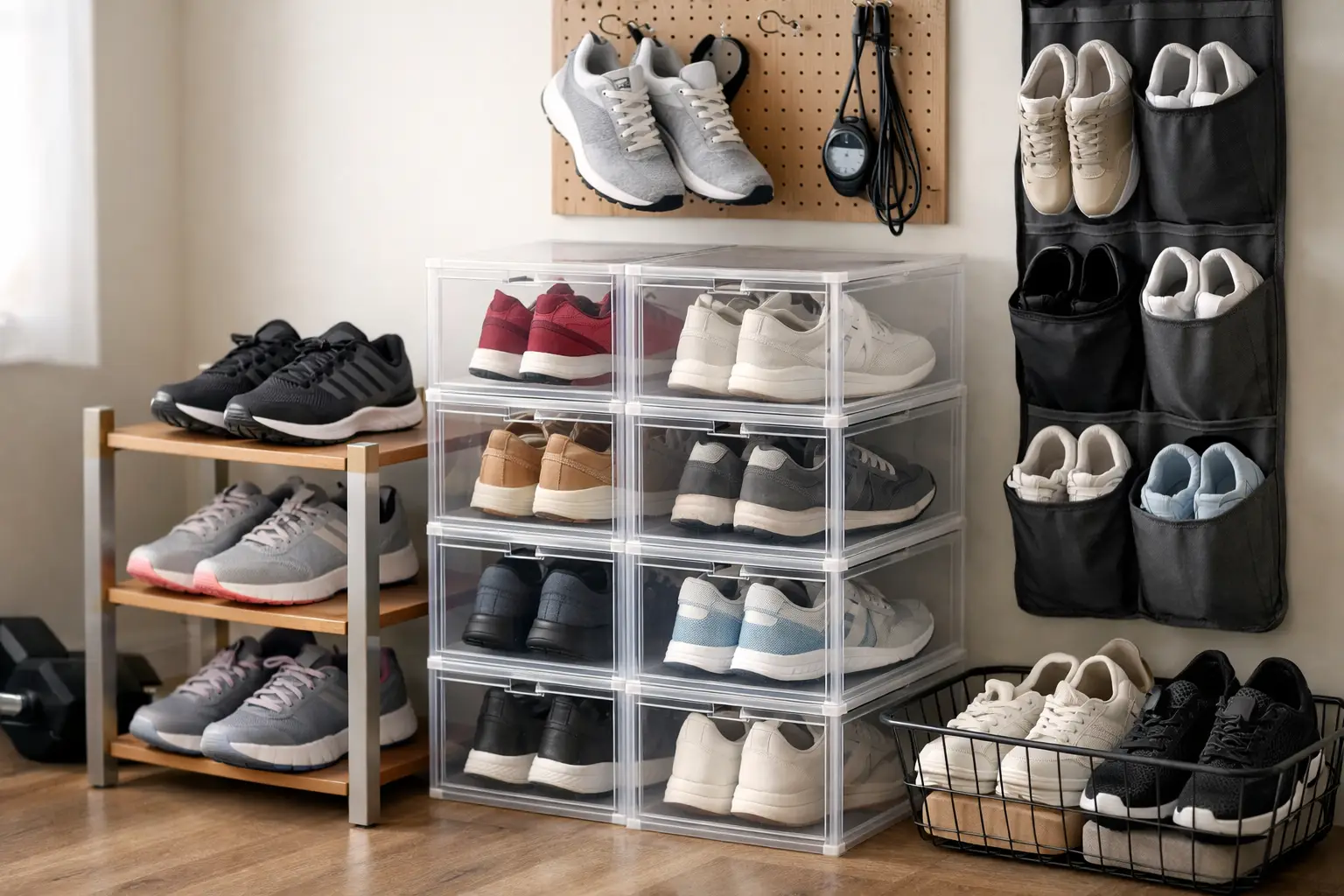
If your trainers are piled by the door, crammed into wardrobes or shoved under the bed, the problem is not your collection – it is your storage. The best trainer storage ideas do two jobs at once: they protect your pairs from dust, fading and accidental damage, and they make the collection easier to enjoy every day.
That matters more than most people think. Trainers are not just everyday footwear anymore. For plenty of households, they are an investment, a style statement and, in some cases, a proper collection. Leaving them exposed on the floor or stacked in a heap is the fastest way to turn good pairs into tired-looking pairs.
Why the best trainer storage ideas start with protection
A lot of people choose storage based on what fits the space, then deal with the downsides later. That is usually where disappointment starts. Open shelving looks good for a week, then the dust settles. Cardboard boxes hide everything, so pairs get forgotten. Soft fabric organisers save money, but they rarely hold shape well and they do very little for presentation.
Good storage needs to handle real life. That means shielding trainers from dirt, household dust, pet hair and sunlight, while keeping them accessible enough that you actually use the system. If it is awkward to open, hard to stack or impossible to see through, it will not stay organised for long.
For everyday wearers, convenience usually comes first. For collectors, display and condition matter just as much. Most people need both.
Trainer storage ideas for small spaces
Small bedrooms, narrow hallways and packed wardrobes need storage that works vertically, not just horizontally. This is where stackable clear boxes are hard to beat. They turn wasted height into usable storage and keep each pair separated, which helps prevent scuffs, crushed heel counters and misshapen uppers.
The clear design matters. If you can see each pair straight away, you are far more likely to keep the system tidy. There is no digging, no guessing, and no pulling down three boxes to find one pair. Drop-front access is even better because it lets you remove trainers without unstacking the whole column.
Under-bed storage can work in a tight room, but it depends on the pairs you own. Slim low-profile drawers are useful for canvas shoes and low-tops. Bulkier trainers, high-tops and special boxes often do not fit well, and anything stored under the bed tends to be less visible, which means less used.
If your home is short on cupboard space, a dedicated storage wall in a bedroom or dressing area often works better than trying to hide everything. It sounds more ambitious than it is. A neat stack of matching crates can look clean, premium and intentional rather than cluttered.
Display-led trainer storage ideas for collectors
If you have limited pairs, almost any storage can get the job done. If you have a growing rotation or a collection you are proud of, display becomes part of the point. That is where generic storage falls short.
Collectors usually want three things: visibility, consistency and protection. Open shelves only really cover one of those. Transparent display boxes do all three. They create a uniform look, protect against dust, and let the trainers stay centre stage rather than turning the room into visual chaos.
Side-view boxes are especially useful for collectors who care about silhouettes, colour blocking and branding details. Front-view options make sense if space depth is tighter or if you prefer a cleaner stacked facade. Fully transparent display units push the visual side even further and work brilliantly for feature pairs, especially in dressing rooms, home offices or dedicated sneaker spaces.
LED-lit cases are more niche, but for standout pairs they can elevate the whole setup. The trade-off is obvious: they are more of a premium choice and not every pair needs that level of presentation. Used selectively, though, they can make your favourites feel properly curated rather than simply stored.
Hallway, bedroom or wardrobe – choosing the right spot
One of the most common mistakes with trainer storage ideas is using the wrong location. The best storage format can still disappoint if it is put in the worst part of the home.
Hallways are practical for daily pairs, but they are also high-traffic areas. Shoes left there get knocked, kicked and exposed to outdoor dirt. If you want hallway storage, go for enclosed units that keep things tidy and reduce visual mess. This is the right place for your regular rotation, not your most valuable pairs.
Bedrooms are better for larger collections because the environment is usually cleaner and more controlled. A storage wall, wardrobe base or dedicated corner gives trainers a proper home and keeps them away from the chaos of entrances and utility spaces.
Wardrobes can work well too, especially for people who want the collection hidden but still protected. The key is measuring properly. Many storage solutions look compact online but waste height or depth in real homes. Modular boxes with consistent dimensions make it easier to scale up without ending up with mismatched stacks and awkward gaps.
The trainer storage ideas that look good on Instagram – and the ones that last
There is nothing wrong with wanting your setup to look sharp. A well-styled trainer display can transform a room. But some storage ideas are all appearance and very little function.
Floating shelves are the obvious example. They can look brilliant in photos, especially with a few carefully spaced pairs. In everyday use, they leave trainers open to dust and UV exposure, and they are rarely practical for larger collections. They suit display-only shoes in low numbers, not proper long-term storage.
Benches with shoe compartments are useful in family homes, particularly near the front door, but they work best for mixed footwear rather than serious trainer collections. They are convenient, not collector-grade.
Clear stackable crates are one of the few options that genuinely deliver both looks and performance. They create a cleaner, more premium visual than random shelving, and they give each pair its own protected space. For style-conscious homes, that balance is hard to beat.
Features worth looking for in premium trainer storage
Not all boxes are built the same, and that matters once you move past a handful of pairs. Flimsy plastic can crack, warp or sag under weight. Weak doors become irritating very quickly. Poor stacking design turns a neat setup into a wobbling tower.
A stronger trainer storage setup should have secure interlocking between units, easy-access doors and enough structure to hold shape properly over time. Magnetic drop-front doors are especially practical because they make access quick while still feeling solid and premium.
Transparency also makes a difference, but so does the type of visibility. Some people prefer a side profile for display. Others want a front-facing look that creates a more uniform wall. The best choice depends on your room, your pairs and whether you care more about presentation or pure storage efficiency.
If you are buying for a growing collection, modular compatibility is a big advantage. Being able to add more boxes later without changing the whole look keeps the setup clean and future-proof. That is one reason premium systems tend to outperform one-off bargain buys.
How to separate everyday pairs from collectible pairs
The smartest trainer storage ideas do not treat every pair the same. Your daily beaters, gym trainers and rainy-day options need quick access. Your limited editions and clean rotation pairs need a bit more care.
A two-zone setup usually works best. Keep your everyday shoes in the most accessible boxes near the door, wardrobe entrance or lower stacks. Move your cleaner, rarer or more expensive pairs into your main display area where they are protected from knocks and easy to admire.
This approach makes the whole system more realistic. You are not pretending every pair needs museum-level treatment, but you are also not leaving your best pairs vulnerable. It is practical, tidy and easier to maintain.
When cheaper storage stops being a bargain
Budget storage can be fine if you only need a short-term fix. But once you own enough trainers that clutter becomes a constant issue, cheap storage often costs more in frustration than it saves in price.
Boxes that collapse, lids that crack and units that do not align properly create a setup you will want to replace. Worse, poor storage can contribute to scuffs, squashed uppers and unnecessary wear. That is not much of a saving if the shoes inside are worth far more than the boxes around them.
That is why many trainer owners eventually move towards a more premium modular system. It is a cleaner look, a better user experience and a stronger long-term solution. ShoeStack is built around that exact idea – storage that protects, stacks properly and looks every bit as considered as the collection itself.
The right setup should make your trainers easier to reach for, easier to protect and much better to look at. If your current system is making good pairs feel like clutter, it is probably time to upgrade the storage rather than cut down the collection.
Leave a Reply