
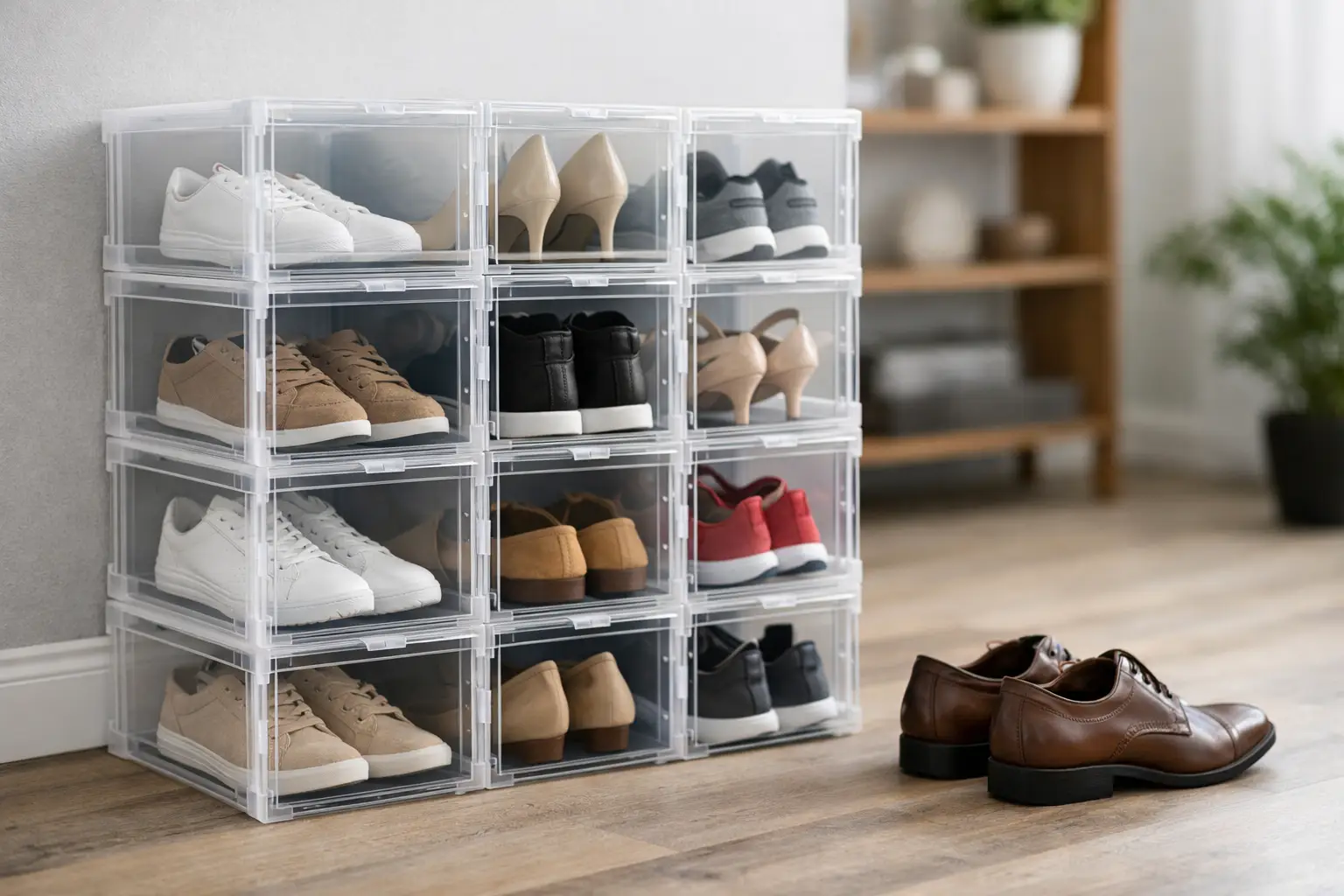
A pile of mismatched boxes in the wardrobe is fine until pair number twelve disappears behind a crushed lid. That is usually the moment people start looking at interlocking shoe boxes properly. If you own more than a few pairs of trainers, heels or limited releases, basic storage stops being good enough very quickly.
Interlocking designs fix the two biggest problems with ordinary shoe storage – instability and wasted space. They give your collection structure, keep each pair protected, and make the whole setup look intentional rather than improvised. For collectors and style-focused homes, that difference matters.
What interlocking shoe boxes actually do
At a glance, the idea is simple. Each box connects securely with the one above and below, so your stack stays aligned instead of shifting every time you open a door or pull out a pair. That sounds like a small upgrade, but in daily use it changes everything.
Standard plastic boxes often slide, lean or separate once you stack them more than a few high. Lids warp, corners slip, and the whole column starts to feel temporary. Interlocking shoe boxes are built to act as a proper modular system, not a compromise. You can build upwards, keep the rows straight, and trust the stack to stay clean and consistent.
That matters even more if your storage is visible in a bedroom, dressing room or hallway. When the boxes line up neatly, your footwear looks curated. When they do not, even expensive pairs can end up looking like clutter.
Why they suit collectors better than standard boxes
If your footwear collection includes premium trainers, special occasion heels or pairs you have taken time to source, storage should do more than hide them. It should protect the shape, reduce dust exposure and make access easy enough that you actually wear what you own.
Interlocking shoe boxes are stronger on all three fronts. Because they are designed to stack securely, they are less likely to collapse or distort under weight. Because they sit flush, they help create a tidier seal against everyday dust and dirt. And because the structure stays stable, opening one box does not throw the rest of the stack out of place.
For sneaker collectors, there is another advantage – presentation. A clean wall of matching boxes instantly looks better than a mix of cardboard originals and bargain plastic tubs. You still get practical storage, but you also get a display setup that feels premium.
The real benefit is modular storage
The best storage systems grow with your collection. That is where interlocking formats stand out.
Instead of buying a random set of boxes and hoping they fit your space, you can build in sections. Start with one column, then add another. Use a low row under a hanging rail, build a full-height stack in a corner, or create a display wall in a spare room. The point is not just stackability. It is controlled expansion.
That flexibility matters because most people do not buy all their footwear at once, and they do not store it in one perfect room either. A modular system lets you adapt without ending up with three different box types that do not align. For anyone serious about keeping things organised, that compatibility is worth paying for.
Protection is where quality shows
Not all interlocking boxes are equal. Some are little more than thin plastic shells with clips. They may stack, but that does not mean they protect your shoes properly over time.
A stronger version will keep its shape, support weight, and close cleanly without feeling flimsy. If the material clouds easily, flexes too much or feels awkward to open, the storage will become frustrating fast. That is especially true if you access your collection often.
A good setup should help defend against dust, household dirt and accidental knocks. For prized pairs, you may also want protection from UV exposure, particularly if the boxes sit near natural light. Clear display boxes can look sharp, but visibility should not come at the cost of material quality.
This is where premium, collector-focused design earns its place. Features such as magnetic drop-front doors, stronger panels and dependable locking points are not there for show. They make the boxes easier to live with and far more suitable for long-term use.
Interlocking shoe boxes and display value
Some storage is built to disappear. Some is built to elevate the room. It depends on what kind of owner you are.
If your main goal is simply to keep spare pairs off the floor, almost any closed container can do a job. But if you have invested in your footwear and want it to feel part of the room, interlocking shoe boxes make much more sense. They turn storage into display without sacrificing order.
This is particularly useful with statement trainers, designer heels and colour-led collections. Transparent or side-view formats let you spot the right pair instantly, while the interlocking structure keeps the whole presentation sharp. No wonky stacks. No collapsing corners. No rummaging.
The result is cleaner visually and more practical day to day. You spend less time digging through boxes and more time actually seeing what you own.
Are they always the best option?
Usually, yes – but it depends on your space and how you use your shoes.
If you only need to store a couple of pairs in a cupboard and you rarely rotate them, interlocking boxes may feel like more system than you need. In that case, simplicity may be enough. But once your collection starts growing, the limitations of basic storage show up quickly.
If you wear your shoes often and want easy front access, interlocking boxes with drop-front openings are the better option. If your priority is maximum visibility, clear display styles will suit you more. If you are storing bulky high-tops or larger sizes, dimensions matter just as much as stackability. The right box is not only the one that locks together. It is the one that fits your collection properly.
That trade-off is worth being honest about. A premium storage system should match the way you live, not just look good in photos.
What to look for before you buy interlocking shoe boxes
The first thing to check is footprint. Measure the space you actually have, including height, depth and access around doors or rails. A sleek stack is no use if you cannot open it comfortably.
Then look at the opening style. Top-lid boxes can work, but they are less convenient in tall stacks. Front-opening or magnetic drop-front designs are far easier when boxes are stacked several high. They let you access one pair without disturbing the rest.
Material clarity matters if display is part of the appeal. So does consistency across the range. If you plan to add more boxes later, matching dimensions and interchangeable formats make life easier. That is one reason serious buyers tend to move towards specialist systems rather than generic storage from mixed retailers.
Assembly is another point people underestimate. Good boxes should go together quickly and lock firmly without fuss. If setup feels awkward at the start, using them every day rarely improves the experience.
And finally, pay attention to reassurance. Satisfaction guarantees, reliable delivery and lifetime parts replacement are not throwaway extras. They tell you whether the brand understands this is a long-term storage solution, not a disposable purchase.
Why premium storage ends up being better value
Cheap boxes can look tempting when you are buying in volume. But replacing cracked panels, fighting unstable stacks and rebuying mismatched designs usually costs more in the long run.
Premium interlocking shoe boxes justify themselves through durability, better protection and a stronger visual finish. They also reduce the friction that stops people from staying organised. When your setup looks smart, opens easily and fits together properly, you are far more likely to keep using it well.
That is the real value. Not just storing shoes, but storing them in a way that respects what they cost and how they should look.
For collectors, that difference is obvious. For busy households, it becomes obvious fast. A proper system saves space, cuts clutter and keeps your favourite pairs ready to wear.
ShoeStack was built around that exact idea – premium storage that protects, displays and scales with your collection.
The smarter choice for growing collections
Interlocking shoe boxes work better because they solve the mess at the source. They keep stacks stable, make rooms look cleaner, protect the pairs you care about and give your collection space to grow without losing control.
If you take pride in your footwear, your storage should look and perform like it belongs with the rest of your setup. Buy once, stack properly, and give your shoes the kind of home that makes the whole collection feel sharper.
Leave a Reply